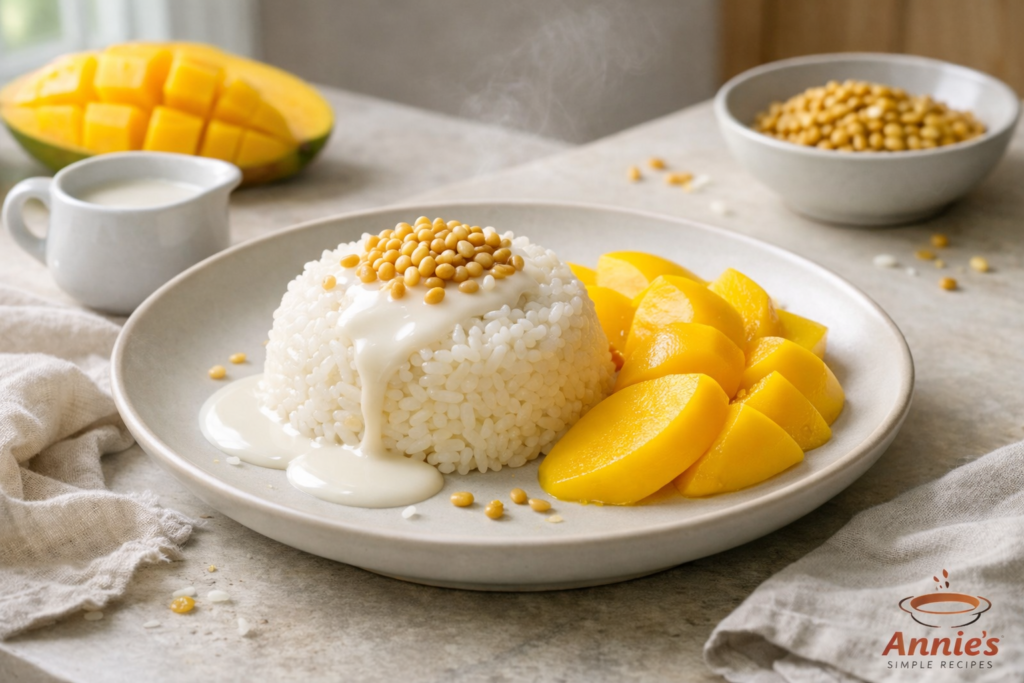
Thai mango sticky rice, also known as Khao Niew Mamuang, is one of the most loved Thai desserts. At its heart, the dish combines chewy glutinous rice, rich coconut cream, and ripe mango for a balance that feels indulgent yet light.
Although the presentation looks elegant, the method remains approachable for home cooks. By allowing the hot rice to slowly absorb warm coconut milk, each grain becomes glossy and tender. As a result, the finished dish feels rich without being heavy.
Why this Thai mango sticky rice works so well
First of all, the recipe relies on technique rather than complicated ingredients. In addition, each component plays a clear role in flavour and texture.
-
Naturally vegan and gluten-free
-
Made with a short, well-balanced ingredient list
-
Sweet rice paired with a gently salty coconut topping
-
Ideal after spicy meals or as a light dessert
-
Easy to prepare ahead with simple planning
What makes mango sticky rice authentic?
Traditionally, mango sticky rice uses glutinous rice, which provides the signature chewy texture. Instead of boiling, cooks steam the rice and then infuse it with sweetened coconut milk while it is still hot.
At the same time, a separate salty coconut topping adds contrast. Because of this balance, the dessert never tastes overly sweet. Pandan leaves are often used during steaming to add aroma, which enhances the final flavour without overpowering it.
Ingredients for Thai mango sticky rice
The sticky rice
-
250 g (about 1¼ cups) glutinous rice
-
Water, for soaking
-
2–3 pandan leaves, knotted (optional but recommended)
Sweet coconut sauce (for absorbing into the rice)
-
150 ml (⅔ cup) full-fat coconut milk
-
60 g (¼ cup plus 1 tablespoon) sugar
-
½ teaspoon salt
Salty coconut topping
-
100 ml (½ cup) coconut milk
-
¼ teaspoon rice flour mixed with 1 teaspoon water
-
¼ teaspoon salt
To serve
-
2 ripe mangoes, peeled and sliced
-
1 tablespoon fried split mung beans or toasted sesame seeds
How to make Thai mango sticky rice (Step-by-Step)
Phase 1: Steaming the rice
-
Rinse the glutinous rice gently several times until the water runs mostly clear.
-
Next, cover the rice with plenty of water and soak for at least 4 hours, or overnight.
-
Once soaked, drain the rice well and line a steamer with muslin or a clean cloth.
-
Spread the rice evenly and place the knotted pandan leaves on top.
-
Steam over boiling water for 20–25 minutes, turning the rice halfway through.
-
When ready, the rice should look translucent and feel chewy but soft.
Phase 2: Infusing the rice
-
Meanwhile, gently heat the coconut milk, sugar, and salt in a saucepan until dissolved. Do not boil.
-
Transfer the hot rice to a bowl and remove the pandan leaves.
-
Pour the warm coconut mixture over the rice and stir gently to combine.
-
Then cover tightly and leave to rest for 20 minutes so the rice absorbs the liquid fully.
Phase 3: Coconut topping and serving
-
In a small pan, heat the remaining coconut milk with salt.
-
Stir in the rice flour mixture and simmer briefly until slightly thickened.
-
Arrange the sticky rice on serving plates and add the mango slices.
-
Finally, spoon the salty coconut topping over the rice and finish with mung beans or sesame seeds.
Expert cooking tips
-
Always use glutinous rice, as other varieties will not give the correct texture.
-
Keep the coconut milk below boiling point to prevent splitting.
-
For best results, serve the rice warm so the flavour and texture shine.
Frequently Asked Questions
Can I use brown sticky rice?
Yes, but it needs overnight soaking and a longer steaming time. The flavour will be nuttier and slightly firmer.
How should leftovers be stored?
Mango sticky rice tastes best fresh. However, you can refrigerate the rice for up to 24 hours and reheat gently with a splash of coconut milk.
Is mango sticky rice vegan?
Yes. This dessert is naturally plant-based, dairy-free, and gluten-free.
Recipe Information
Prep time: 15 minutes
Soak time: 4 hours (or overnight)
Cooking time: 25 minutes
Total time: 40 minutes (excluding soaking)
Serves: 4
Difficulty level: Easy to Medium